LUNA vs Traditional Photography Compared
LUNA Team · 2026-02-05 · 3 min read
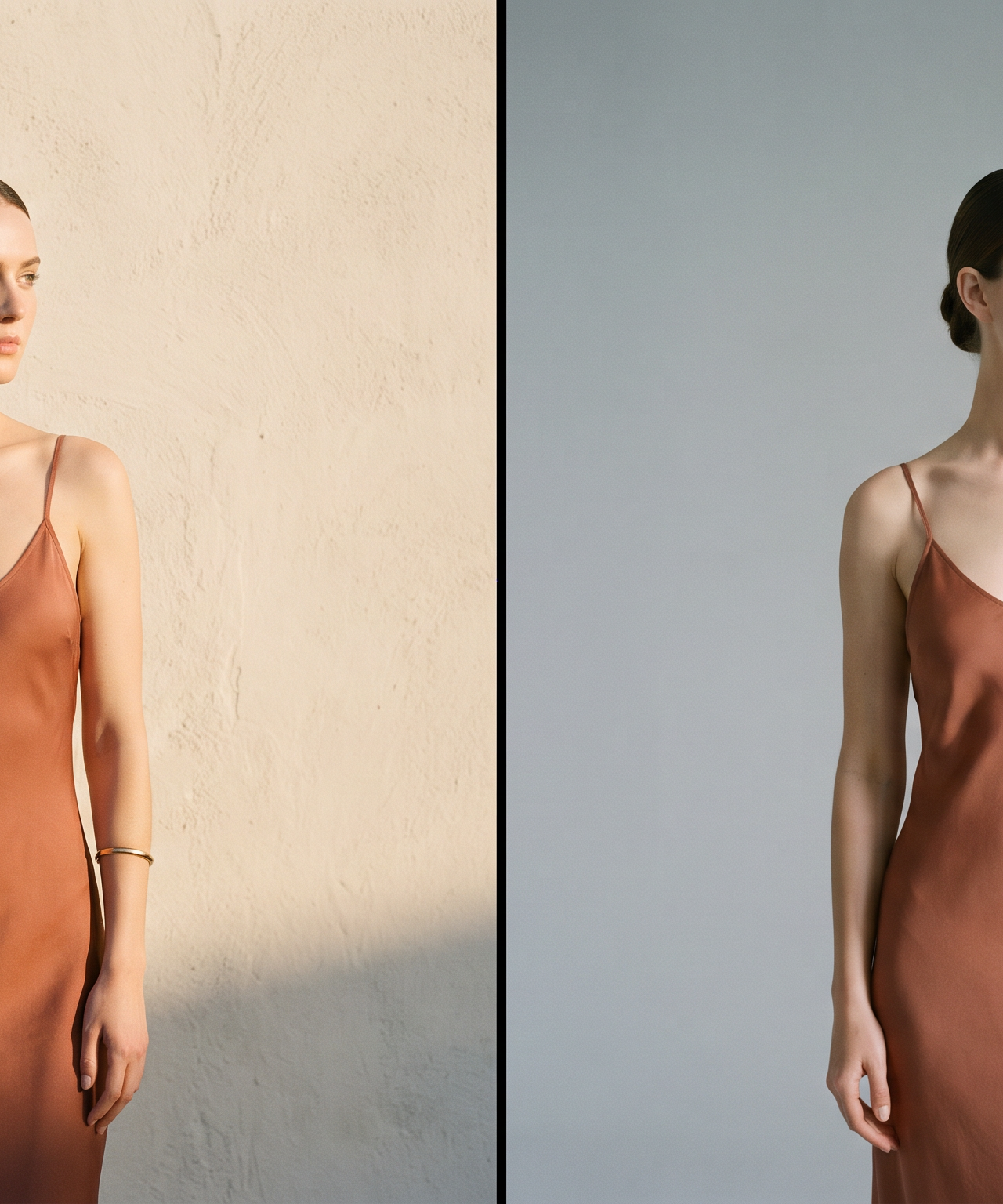
This is not a piece arguing that AI will replace photographers. The real question is more nuanced: for a given creative need, which approach delivers the best result for your budget, timeline, and quality requirements?
The Comparison at a Glance
| Dimension | LUNA | Traditional Photography |
|---|---|---|
| Cost per image | Low (credit-based) | High ($50-500+ per image) |
| Turnaround | Minutes | Days to weeks |
| Consistency | Near-perfect | Variable |
| Scale | Unlimited variations | Each variation needs a new setup |
| Physical accuracy | Excellent for most uses | Exact |
| Genuine moments | Not applicable | Irreplaceable |
Where LUNA Excels
Volume content production. When you need 50 product shots across 10 environments, traditional photography means 10 setups and multiple shoot days. LUNA generates each variation from the same references - the 50th image costs the same as the first.
Rapid iteration. Want warmer lighting? Change the kit. Different background? Adjust the environment. With LUNA, iteration means regenerating in minutes, not reshooting.
Consistent branding. When you define a kit, every image shares the same visual DNA. This level of consistency is extremely difficult across multiple traditional shooting days.
Versatile creative workflows. LUNA's World Canvas handles any kind of content - people, products, spaces, food, characters, vehicles - all with consistent branding. A restaurant needing food photography, interior shots, and team headshots can handle all three in one platform.
Where Traditional Photography Excels
Luxury and high-end editorial. A skilled photographer directing a model, reading the light, and making split-second creative decisions produces images that remain the gold standard for premium campaigns.
Physical product accuracy. When exact representation matters - precise fabric texture, light refracting through glass - a camera capturing the real object produces authoritative results.
Genuine human moments. Someone genuinely laughing, a candid keynote moment, team interactions - these cannot be generated. They have to be captured.
One-of-a-kind creative vision. When a creative director has a specific, unprecedented vision, a photographer can interpret and execute in real-time.
The Hybrid Approach
The smartest brands use both strategically.
Use LUNA for: day-to-day content, social media at scale, product catalogs, team headshots, seasonal content, concept exploration, and quick-turnaround needs.
Use traditional photography for: hero brand campaigns, executive portraits for major press, event coverage, luxury product launches, and documentary content.
Quick Decision Framework
Choose LUNA when you need many images with consistent style, speed matters, content is for digital channels, you want to iterate quickly, or your budget is limited relative to volume needed.
Choose traditional when you are creating hero campaign content, the shoot involves real moments, physical accuracy is critical, or the creative concept is highly experimental.
Frequently Asked Questions
Can people tell the difference?
For most commercial applications - headshots, product shots, social content - LUNA produces images indistinguishable from professional photography at web resolution.
Will AI replace traditional photography?
No. AI handles routine, high-volume content. Traditional photography focuses on high-craft, high-impact work. Both will continue to coexist.
The best creative strategy is not about choosing sides. LUNA gives you speed, consistency, and scale. Traditional photography gives you authenticity, craft, and presence. Together, they cover the full spectrum.
Try LUNA and see where it fits in your creative workflow.