How to Keep an AI Character Consistent Across Every Image (2026)
LUNA Team · 2026-07-13 · 8 min read
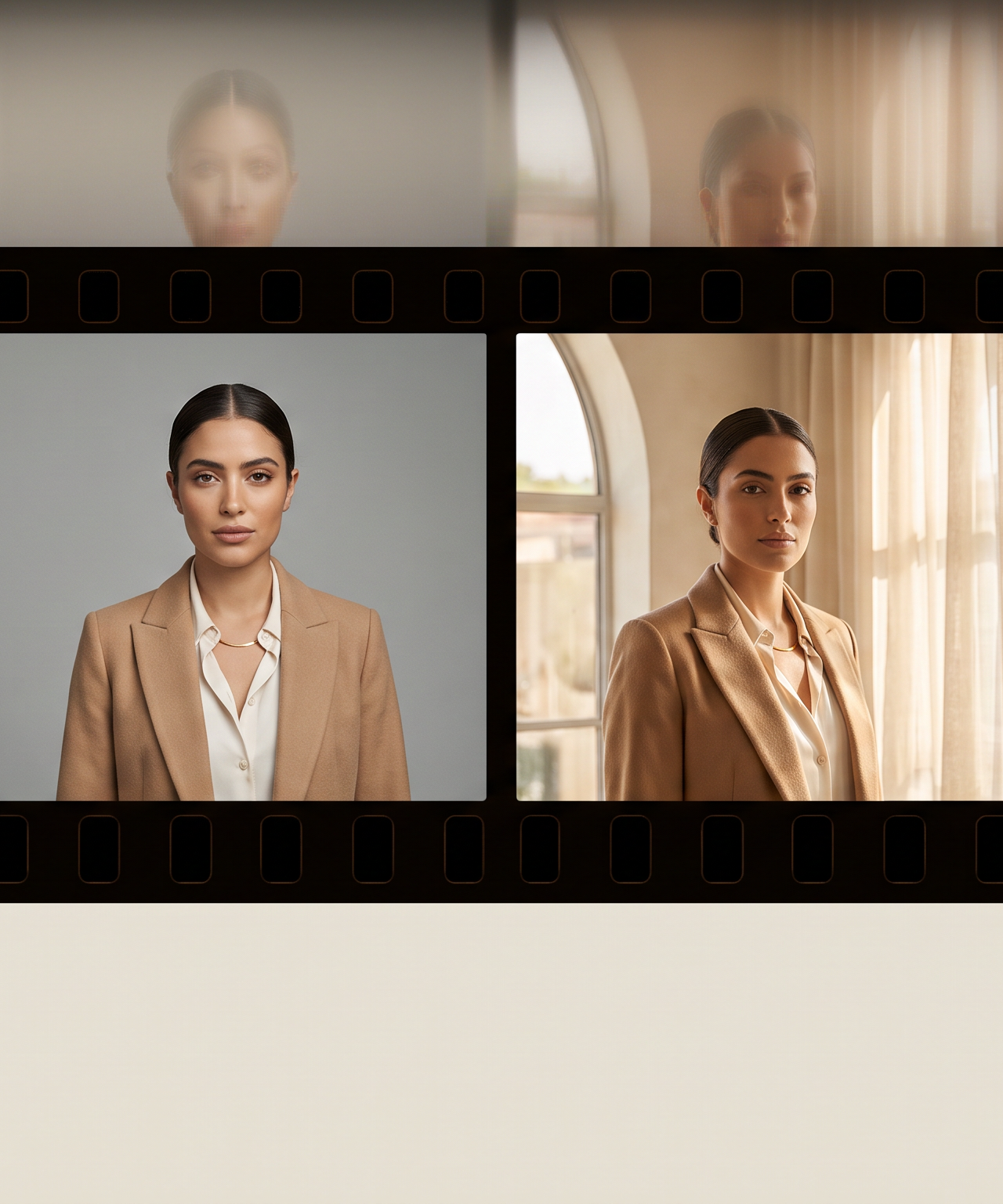
To keep an AI character consistent across every image, stop describing the character in a fresh text prompt each time and instead save the character as a reusable, reference-based identity, then generate every new scene from that saved identity. When a tool stores who the character is rather than re-imagining them from words, the face, body, and wardrobe hold steady from one image to the next.
This is the single biggest problem creators hit when they move from making one nice image to producing a whole series, a campaign, a comic, or a lookbook. The generator is not broken. It was simply never asked to remember anyone.
Why do AI characters change in every image?
AI characters drift because most image tools are stateless. Each generation starts from your text prompt and a fresh random seed, so the model re-invents the person from scratch every single time. "A woman with brown hair" describes millions of faces, and you get a different one on every run.
The scale of this is easy to underestimate. More than 150 million people now use AI image generators each month, producing around 80 million images a day, according to 2026 industry statistics compiled by Imagera. Almost all of those are one-off images. The moment someone needs the same subject twice, the workflow falls apart.
Text prompts are the root cause. Language is too loose to pin down a specific face. You can add hair color, age, and clothing, but you cannot describe the exact distance between someone's eyes or the precise shape of a jaw in words. So the model fills the gaps differently each time, and your character quietly becomes a stranger.
What does true character consistency actually require?
Real consistency requires three things: a locked identity, a reusable definition of that identity, and a way to place it into new scenes without redescribing it. Miss any one and the character drifts.
- A locked identity. The face and body must come from reference images, not from words. Images carry the exact detail that language cannot.
- A reusable definition. That identity has to be saved as an asset you can call up again, not re-typed as a prompt for every image.
- Scene independence. You need to change the location, lighting, outfit, and pose while the identity stays fixed underneath.
This is why "better prompting" only takes you so far. Prompt tricks, seed locking, and negative prompts reduce variation, but they still rebuild the person from scratch each time. They treat the symptom. Consistency is a memory problem, and prompts have no memory.
How to keep an AI character consistent, step by step
Here is the reliable workflow, independent of any one tool.
Step 1: Define the character from references, not words. Gather or generate a small set of clean reference images of the character's face and body. This reference set becomes the source of truth. A studio built around reference-based identity uses these images to learn the exact features, so the character is defined by pixels, not adjectives.
Step 2: Save the character as a reusable element. Store that identity as a named asset you can reuse. Now the character is a thing you own, not a sentence you retype. Every future image points back to the same saved element, which is what holds the face stable.
Step 3: Build the world around the character. A character rarely lives alone. Define the recurring locations, the wardrobe, and the key props once, and save those too. When your world is a library of saved elements, a new image is an act of composition, not reinvention.
Step 4: Compose the scene, keep the identity fixed. Place the saved character into a new setting and change everything around them: the background, the lighting, the camera angle, the outfit. A visual canvas that lets you arrange elements before generating gives you this control, so you direct the shot instead of gambling on a prompt.
Step 5: Generate, review, and reuse. Produce the image, keep what works, and feed strong results back in as new references. Over time the identity gets sharper and the drift keeps shrinking.
The mental shift is the whole game. You are not writing prompts anymore. You are building a visual world once and then generating from it forever.
Reference-based identity versus writing better prompts
The difference between these two approaches is the difference between describing a person and introducing them.
A prompt describes. You hand the model a paragraph and hope it draws the same person it drew yesterday. Reference-based identity introduces. You show the model exactly who this is, save that, and reuse it. One is a guess repeated daily. The other is a fact stored once.
This matters commercially, not just artistically. Among marketers, 62 percent already use generative AI to create image assets, and 79 percent plan to increase spending on generative AI content in 2026, per eMarketer's 2026 analysis of generative AI adoption. A brand cannot ship a campaign where the model's face changes between the hero image and the ad. Consistency is what separates a fun demo from usable brand work.
How do you build a reusable visual world around your character?
You extend the same reference-based method from the character to everything the character touches: locations, wardrobe, and props. Each becomes a saved element, and together they form a world you can generate from indefinitely.
- Locations. Save the recurring places your story or brand lives in, so the same room, street, or set returns exactly the same across a whole series.
- Wardrobe. Define outfits as reusable pieces, so a character can change clothes on purpose instead of by accident.
- Props. Lock the specific objects that matter, from a product you sell to a signature item a character carries.
- Kits and creative direction. Bundle a consistent visual language, so an entire campaign or season shares one look without you redescribing it every time.
The AI image market is growing at roughly a 32 percent compound annual rate through 2030, according to market data aggregated for 2026. As volume explodes, the winners will not be the people who can make one striking image. They will be the ones who can make the two hundredth image match the first.
What common mistakes break character consistency?
Most drift comes from a handful of avoidable habits.
- Redescribing the character every time. If you are retyping "a 30 year old woman with freckles" into each prompt, you are asking for a new person on every run.
- Weak or messy references. Blurry, cluttered, or inconsistent reference images teach the model a fuzzy identity, and a fuzzy identity drifts.
- Changing the identity and the scene at once. Move the character into a new location while keeping the identity locked. Do not renegotiate the face and the background in the same breath.
- Treating outputs as disposable. Your best results are training material. Feed them back as references so the character sharpens over time.
Frequently asked questions
Why does my AI character look different in every image? Because most tools rebuild the character from your text prompt and a random seed every time, with no memory of previous images. Words cannot pin down an exact face, so you get a new person on each run. Saving the character as a reference-based identity and reusing it is what stops the drift.
Can I keep an AI character consistent using only prompts? Not reliably. Seed locking and detailed prompts reduce variation, but they still regenerate the person from scratch, so the face keeps shifting in subtle ways. Consistency is a memory problem, and prompts have no memory, so you need saved references instead.
How many reference images do I need for a consistent character? A small, clean set is usually enough to lock a face and body, as long as the images are sharp, well lit, and show the character clearly. Quality matters far more than quantity. Messy references teach a fuzzy identity that drifts.
What is a visual world in AI image generation? A visual world is a saved library of your recurring characters, locations, wardrobe, and props, all defined once so you can generate new images from them repeatedly. Instead of writing a new prompt for every image, you compose scenes from elements you already own, which keeps everything consistent.
Does character consistency work for products and brand mascots too? Yes. The same reference-based method that locks a person's face also locks a product's exact shape and materials or a mascot's design, so they stay identical across every scene, angle, and campaign. This is what makes AI usable for real brand work rather than one-off images.
Is this useful for comics, lookbooks, and children's books? Very. Any project that reuses the same character across many images benefits most, because that is exactly where prompt-based tools fall apart. Comics, webtoons, fashion lookbooks, and illustrated books all depend on a character staying recognizably the same from panel to panel and page to page.
Build the world once, then generate from it
Character consistency stops being a fight the moment your character is a saved element instead of a sentence you retype. Build your characters, locations, and wardrobe once, then compose every new image from them. That is what LUNA is built for. Start building your visual world at useluna.app.